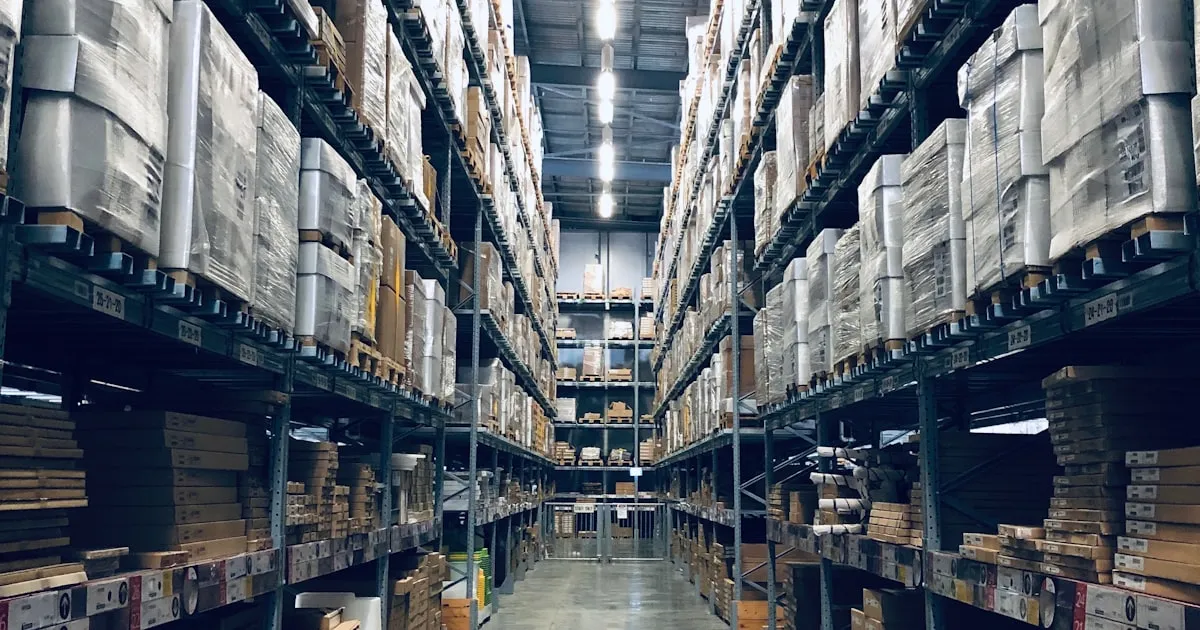
Unlike generic HR software, an LMS is purpose-built for the warehouse floor. It understands the unique dynamics of pick rates, put-away times, packing speeds, and dock-to-stock cycles.
At its core, an LMS answers three critical questions:
- How productive are my workers? — Measured against engineered standards, not guesswork.
- Am I staffing the right number of people at the right times? — Based on demand forecasts and shift templates.
- Where are the improvement opportunities? — Identified through leaderboards and performance trends.
Key Features of the SmartWMS LMS Module
Labor Standards
Labor standards form the foundation of any LMS. In SmartWMS, you can define expected productivity rates for every task type — picking, packing, receiving, put-away, and more.
Each standard includes:
- Task type — The activity the standard applies to (e.g., “Case Pick,” “Each Pick,” “Pallet Put-away”)
- Expected units per hour — The target rate based on time studies or historical data
- Time allowances — Built-in buffers for travel time, rest breaks, and equipment handling
Standards are not one-size-fits-all. SmartWMS allows you to create multiple standards for different zones, product categories, or equipment types.
For example, cold storage picking naturally has a lower expected rate than ambient picking — and your standards should reflect that.
Shift Templates
Shift templates allow you to define recurring work schedules that can be applied across your workforce.
Instead of manually scheduling each worker every week, you create templates such as “Morning Shift (6:00–14:00),” “Evening Shift (14:00–22:00),” or “Weekend Rotation,” and assign them to teams.
Each template includes:
- Start and end times
- Break schedules — Automatically deducted from productive time calculations
- Applicable days — The days of the week the shift runs
- Capacity — Maximum number of workers per shift
Templates save hours of administrative work and ensure consistent coverage across all operational hours.
Worker Schedule
The worker schedule combines shift templates with individual assignments. Managers can:
- Assign workers to shifts based on their skills, certifications, and availability
- View weekly calendars with a visual grid showing who is working and when
- Handle exceptions — Swap shifts, cover absences, or add overtime without disrupting the entire schedule
- Forecast labor needs — Compare scheduled hours against predicted order volumes to identify staffing gaps before they become critical
Performance Leaderboard
The leaderboard is where data meets motivation.
SmartWMS calculates a real-time productivity score for each worker based on actual output versus the applicable labor standard.
Key metrics displayed:
- Units processed — Total items picked, packed, or received during the shift
- Productivity rate — Actual units per hour compared to the standard
- Performance score — A percentage-based score (100% = meeting the standard, 120% = exceeding it by 20%)
- Ranking — How each worker compares to their peers
The leaderboard is not about punishment — it is about visibility.
Workers who consistently exceed targets can be recognized and rewarded. Those who struggle can be identified for additional training or reassigned to tasks that better match their strengths.
Worker Performance Analytics
Beyond the real-time leaderboard, SmartWMS provides in-depth performance analytics:
- Trend analysis — How has a worker’s productivity evolved over weeks and months?
- Task breakdown — Which task types does a worker excel at, and where do they lag?
- Shift comparison — Do morning shifts consistently outperform evening shifts?
- Team benchmarks — How does one team compare to another across identical task types?
These insights help managers move from reactive management (“Why was today slow?”) to proactive optimization (“Let’s restructure Zone 3 assignments based on Q1 data.”).
Implementation Best Practices
Start with Accurate Standards
The most common mistake in LMS implementation is setting unrealistic standards.
If standards are too aggressive, workers become demotivated. If too lenient, the system delivers little value.
Use a combination of time studies, historical data, and gradual refinement to establish a realistic baseline.
Communicate Transparently
Workers need to understand that the LMS exists to support performance — not to monitor excessively.
Share the metrics openly, explain how scores are calculated, and position the leaderboard as a positive performance tool.
When high performers are recognized and rewarded, engagement improves naturally.
Review and Adjust Regularly
Standards should evolve as your operation changes.
New product lines, layout adjustments, or equipment upgrades all impact productivity. Schedule quarterly reviews of your labor standards and refine them based on actual performance data.
Integrate with Incentive Programs
The most effective LMS implementations connect performance data to tangible rewards — such as bonuses, preferred shift assignments, or formal recognition programs.
When workers see a direct link between effort and reward, sustained productivity improvements follow.
The Bottom Line
A Labor Management System is not a luxury — it is essential for any warehouse aiming to control its largest cost category.
SmartWMS integrates LMS capabilities directly into the platform you already use for inventory, orders, and fulfillment, eliminating the need for separate systems and manual data reconciliation.
With labor standards, shift templates, scheduling tools, leaderboards, and advanced analytics all in one place, SmartWMS provides the visibility and control needed to build and maintain a high-performing warehouse team.
Want to see this in practice? Explore the labor management system built into SmartWMS — real-time productivity tracking, task assignment, and labor analytics for small and mid-sized warehouses, with no separate LMS software required.